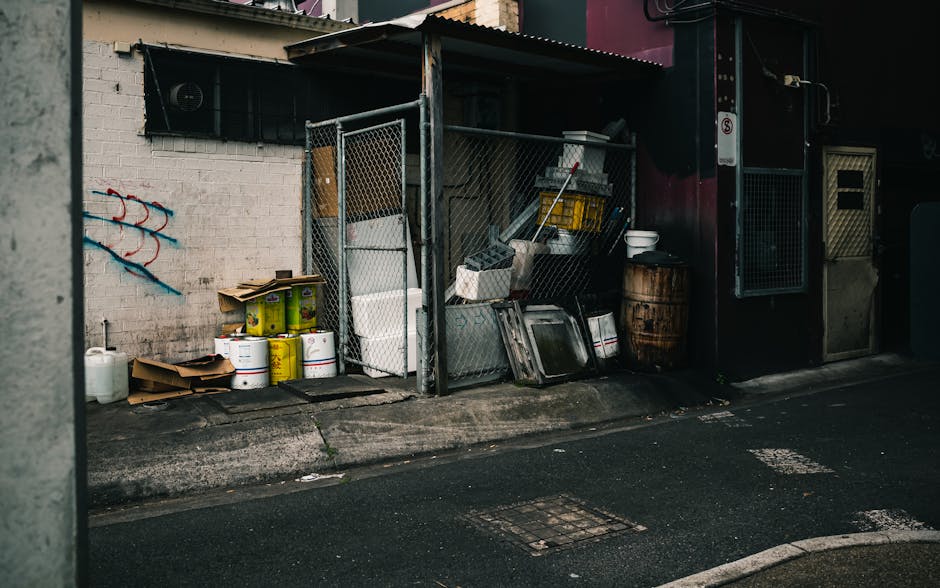
Fortess Road bulky rubbish removal guide
If you are dealing with a sofa in the hallway, an old mattress leaning against the wall, or a pile of mixed household junk that has quietly grown legs, this Fortess Road bulky rubbish removal guide is for you. Bulky waste always looks simpler from a distance than it is in real life. Then you get to the stairs, the narrow landing, the awkward lift, the time pressure, and suddenly it is a proper job.
This guide explains how bulky rubbish removal works, what to expect, what to avoid, and how to choose the most sensible route for your situation. Whether you are clearing one item or several rooms' worth of stuff, the goal is the same: get it out safely, legally, and without making a mess of your day. Let's face it, nobody wants a broken wardrobe sitting there for another week.
For a broader look at clearance services and responsible disposal, you may also find the main waste removal service and the company's recycling and sustainability approach useful as you plan the job.
Contents
- Why Fortess Road bulky rubbish removal guide Matters
- How Fortess Road bulky rubbish removal guide Works
- Key Benefits and Practical Advantages
- Who This Is For and When It Makes Sense
- Step-by-Step Guidance
- Expert Tips for Better Results
- Common Mistakes to Avoid
- Tools, Resources and Recommendations
- Law, Compliance, Standards, or Best Practice
- Options, Methods, or Comparison Table
- Case Study or Real-World Example
- Practical Checklist
- Conclusion
- Frequently Asked Questions
Why Fortess Road bulky rubbish removal guide Matters
Bulky rubbish is not just "big rubbish". It is usually awkward rubbish. That difference matters. A heavy item might be easy to identify but hard to move. A small-looking load can turn into several trips, a rented vehicle, and a surprisingly sore back. If the item is bulky, awkward, sharp, dirty, or just too much for your normal bins, you need a proper plan.
On Fortess Road and the surrounding streets, space can be tight. Parked cars, front steps, basement flats, shared entrances, and busy foot traffic all make bulk clearances more complicated than they first appear. You may be able to move a chest of drawers in theory. In practice, the route out of the property is often the real challenge.
This is why a clear bulky rubbish removal plan matters. It saves time, avoids damage to walls and floors, and lowers the chance of injury. It also helps you separate items that can be reused or recycled from the things that need specialist handling. That last part is worth taking seriously. Not everything should be bundled into a mixed pile and hoped for the best.
Expert takeaway: the fastest bulky rubbish removal jobs are rarely the ones with the biggest pile. They are the ones where the items have been sorted, access is checked, and the disposal route has been decided before lifting begins.
If your bulky waste comes from a larger property clear-out, it may help to compare this guide with a more specific service such as house clearance, flat clearance, or home clearance.
How Fortess Road bulky rubbish removal guide Works
At its simplest, bulky rubbish removal follows a few common stages: identify the items, confirm what can be taken, prepare access, remove the load, then sort it for disposal or recycling. The details vary depending on the type of waste and the layout of the property, but the overall process is usually straightforward once you know what you are dealing with.
For domestic clearances, people often have a mix of furniture, broken appliances, old boxes, and general clutter. For commercial premises, it may be office chairs, filing cabinets, shelving, or unwanted stock. In both cases, the key question is not "Can it be thrown away?" but "What is the safest and most responsible way to remove it?"
There are also practical differences between single-item disposal and full-load removal. A single sofa, for example, may be quite simple. A sofa plus a mattress plus a broken wardrobe plus a fridge is a different story. That is where a service that handles mixed bulky waste becomes more useful than trying to do it piece by piece.
People often ask whether they should use a skip or a collection service. The answer depends on access, waste type, volume, and how quickly you want the area cleared. If you want a plain-English overview of what is suitable for a container-based option, the page on what can go in a skip is a sensible reference point.
For items that are especially large or specialist, such as white goods or old upholstery, dedicated services can be more practical. See fridge and appliance removal and mattress and sofa disposal for more targeted disposal routes.
Key Benefits and Practical Advantages
The main advantage of a structured bulky rubbish removal approach is simple: less stress. But there are a few more concrete benefits worth spelling out.
- Safer lifting and carrying: bulky items can twist your posture in ways you do not feel until later. Planning reduces the risk.
- Less damage to interiors: hallways, banisters, paintwork, and door frames all suffer when items are squeezed through carelessly.
- Faster turnaround: a planned removal is usually much quicker than improvised moving on the day.
- Better sorting for reuse and recycling: separating items early makes responsible disposal easier.
- Less disruption to neighbours: especially important in shared buildings where noise and blockages can become a nuisance.
There is also a mental benefit people underestimate. A clear room feels lighter. You notice the echo in the room, the extra light, the space you had forgotten was there. It sounds small, but after a cluttered corner has been sitting there for months, the difference can feel oddly satisfying.
If your bulky rubbish is part of a larger build or refurbishment, it may be worth looking at builders waste clearance as well. Renovation waste behaves differently from household junk, and it needs a slightly different plan.
Who This Is For and When It Makes Sense
This guide is useful for a wide range of people. You do not need a massive clear-out to make it worthwhile. Sometimes one troublesome item is enough.
- Homeowners clearing old furniture, broken appliances, or loft clutter
- Tenants moving out and needing the last bulky bits removed
- Landlords preparing a property for re-letting
- Flat owners dealing with tight stairwells or shared access
- Office managers disposing of desks, chairs, or filing units
- Small businesses with surplus stock, packaging, or worn equipment
- People handling bereavement or estate clearances who need a careful, respectful approach
It makes sense to use a professional bulky rubbish removal route when the items are too heavy, too awkward, too many, or too risky to move safely without help. If that sounds obvious, well, yes - but in practice many people still try to move a wardrobe down stairs alone. Usually after saying "this should be fine." It rarely is.
For room-by-room situations, these pages can help you decide what kind of clearance you need: loft clearance, garage clearance, garden clearance, and office clearance.
Step-by-Step Guidance
A good bulky waste job is mostly about preparation. Here is a practical way to handle it.
- List the items. Walk through the space and write down everything that needs to go. Include dimensions if the item is awkward.
- Separate by type. Keep furniture, electrical items, general junk, and anything hazardous apart from each other.
- Check access. Measure doorways, note stair turns, look at parking, and think about where the load will be carried from.
- Decide what can be reused. A usable chair or table may be suitable for donation or resale, while damaged items should be sent for disposal.
- Remove loose contents first. Drawers, shelves, cushions, and detachable legs make moving safer and easier.
- Protect floors and corners. Cardboard, blankets, or simple protective coverings can prevent scuffs and bumps.
- Book the right service. Choose a collection option that matches the quantity, item type, and timing you need.
- Keep pathways clear on the day. Shoes, mats, pet toys, and bags all become obstacles when a large item is being carried out.
- Do a final sweep. Check cupboards, behind doors, and under beds. It is amazing how often one extra item turns up at the last second.
If you are sorting mixed rubbish as part of a larger clean-up, you may also want to look at the broader furniture clearance and house clearance services to match the scale of the job.
Expert Tips for Better Results
After enough bulky clearances, a few patterns become clear. First, the item is rarely the only problem; access usually is. Second, mixed waste slows everything down. Third, people tend to underestimate the weight of old furniture. Wood, wet fabric, metal frames, and drawers full of random bits add up fast.
Here are some practical tips that genuinely help:
- Break down what you can. Flat-pack furniture often comes apart with basic tools, and that can halve the carrying difficulty.
- Keep screws and fittings in a labelled bag. If any item is going to be reused, sold, or reassembled, this saves a headache.
- Move bulky items at the quietest time possible. In shared buildings, early morning can be better than the middle of the day, though every block is different.
- Ask about item types before booking. Fridges, mattresses, sofas, and anything with electrical components may need different handling.
- Leave a little breathing room. A packed hallway makes the job much harder than it needs to be.
One small but useful habit: take a quick photo of the items before collection. It helps avoid confusion, especially if the pile includes mixed furniture and odd bits from different rooms. Nothing fancy. Just a simple photo on your phone. Done.
If safety and handling matter for your particular job, it is worth reviewing the company's health and safety policy and insurance and safety information before booking.
Common Mistakes to Avoid
The biggest mistakes in bulky rubbish removal are usually mundane, not dramatic. They are the little oversights that create bigger problems later.
- Not measuring access: A sofa that fits the room may still fail at the staircase.
- Mixing hazardous items with ordinary waste: that can create safety issues and may require specialist handling.
- Leaving the booking too late: if you are moving out or completing works, delay can get expensive in time and stress.
- Trying to carry heavy items alone: this is how strained backs and chipped walls happen.
- Assuming everything can go together: bulky waste is not all the same. Items need sorting.
- Forgetting appliance prep: fridges and some white goods may need to be emptied or disconnected first.
Another common slip-up is not checking what is actually included in the collection. For example, upholstery, electricals, and awkward mixed loads may all be fine, but it is still sensible to confirm the details. A five-minute check avoids a lot of back-and-forth later.
If you are dealing with a damaged sofa, old mattress, or an appliance that has finally given up, the specialist pages for mattress and sofa disposal and fridge and appliance removal are especially relevant.
Tools, Resources and Recommendations
You do not need a van-load of equipment for every bulky rubbish job, but a few basic tools can make life much easier.
- Tape measure: useful for checking doors, hallways, lifts, and stair widths.
- Gloves: important for grip and for protecting hands from splinters or grime.
- Blankets or floor protection: helps protect flooring and corners on the way out.
- Basic screwdriver or hex key set: ideal for dismantling furniture where appropriate.
- Strong bags or boxes: good for loose fittings, textiles, and small clutter.
- Phone camera: for recording the items, access route, or anything that may need confirmation.
As a practical recommendation, start with the obvious "easy wins". Empty drawers, remove loose shelves, separate small items, and gather recyclables together. That can make a messy job feel much more manageable in ten minutes flat.
On the service side, it helps to look at pricing and payment details before you commit. The pages on pricing and quotes and payment and security are useful if you want to understand how booking and billing are handled.
Law, Compliance, Standards, or Best Practice
Bulky rubbish removal in the UK sits within normal waste-handling expectations, so best practice matters. The main principles are simple: waste should be handled safely, transported responsibly, and taken to an appropriate disposal or recycling route. If an item is classed as hazardous or contains hazardous components, it should not be treated like ordinary household rubbish.
For most people, the main practical concern is making sure the waste goes to a legitimate destination and is handled by someone who knows what they are doing. You do not need to be an expert in waste law to avoid trouble, but you do need to be careful with item types such as chemicals, paints, solvents, fridges, some electricals, and anything contaminated.
In shared buildings and busy streets, it is also good practice to avoid blocking access, keep paths clear, and protect communal areas. That is not just courteous. It is the kind of simple discipline that makes removals go smoothly. Truth be told, a tidy route often matters more than people think.
If you are disposing of anything sensitive or confidential from an office or home workspace, you may need a separate route such as confidential shredding. For businesses handling regular waste, the business waste removal page is also worth reviewing.
Options, Methods, or Comparison Table
There is no single best method for every bulky rubbish job. The right choice depends on volume, item type, access, and urgency. Here is a simple comparison to help you think it through.
| Method | Best for | Pros | Watch out for |
|---|---|---|---|
| Self-loading to a vehicle | Very small loads | May seem cheap if you already have transport | Heavy lifting, time, parking, multiple trips |
| Skip hire | Ongoing projects and larger mixed loads | Useful if waste will build up over time | Space needed, loading effort, item restrictions |
| Bulky collection service | Large furniture, mixed bulky waste, awkward access | Faster, less lifting, convenient for tight spaces | Needs clear item details and access planning |
| Specialist item removal | Fridges, mattresses, sofas, appliances | Handled with the right process | Must confirm item type and prep requirements |
For many Fortess Road properties, a collection service is the most practical choice because access can be tighter than people expect. A skip can still make sense for ongoing renovations, but it is not always the neatest answer if space is limited or parking is awkward.
Case Study or Real-World Example
Here is a realistic example. A couple in a first-floor flat on Fortess Road needed to clear an old three-seater sofa, a broken wardrobe, and a mattress before a tenancy changeover. On paper, it looked like a quick job. In reality, the stairwell turned sharply, the wardrobe had no chance of going out in one piece, and the front entrance was shared with another resident coming and going.
They sorted the job first: cushions off the sofa, wardrobe emptied, screws kept together, mattress moved to one side, route checked, and the lift left out of the plan entirely. They also measured the narrow point at the hallway turn, which saved a lot of trial and error. The wardrobe was dismantled, the sofa was carried in two stages, and the mattress went separately. Simple in hindsight. Less simple when you are standing there at 8:30 in the morning with a hallway full of furniture.
The key lesson was not about strength. It was about preparation. Once the items were organised and the access route was clear, the removal became quick and calm rather than a stressful shuffle. That is really the point of a good bulky rubbish removal plan.
Practical Checklist
Use this checklist before collection day. It keeps the job tidy and reduces avoidable delays.
- List every bulky item that needs removing
- Measure doors, stair turns, and lift access if needed
- Separate furniture, electrical items, and waste types
- Empty drawers, cupboards, and hidden compartments
- Remove loose parts, cushions, or detachable fittings
- Check whether any item needs specialist handling
- Protect floors, corners, and shared access routes
- Clear the pathway from the item to the exit
- Confirm the booking time and collection details
- Take a final walk-through for forgotten items
Quick summary: if you sort the waste, check access, and pick the right disposal method, bulky rubbish removal becomes much less of a drama. Not glamorous, but effective.
If you are ready to move from planning to action, you can book online once you are happy with the scope of the job, or learn more about the people behind the service on the about us page.
Conclusion
Bulky rubbish removal is one of those jobs that looks easier before you start. Once you have a narrow hallway, a heavy item, and a ticking deadline, it suddenly needs a proper plan. The good news is that the process is manageable when you break it down: identify the items, check access, separate waste types, and choose the right method for the load.
For Fortess Road properties in particular, a calm and organised approach goes a long way. Small spaces, shared access, and mixed waste are all common enough. None of it is a disaster, though. It just needs sensible handling, a bit of patience, and the right support where needed.
Get a free quote today and see how much you can save.
And if you are still weighing up the details, take a breath, make the list, and start with the items that are bothering you most. One clear space has a funny way of making the next decision easier.
Frequently Asked Questions
What counts as bulky rubbish on Fortess Road?
Bulky rubbish usually means items that are too large, heavy, or awkward for normal household bins. Typical examples include sofas, mattresses, wardrobes, tables, appliances, and mixed household junk.
Do I need to dismantle furniture before removal?
Not always. But if an item can be safely taken apart, it often makes removal easier and reduces the risk of damage. Flat-pack furniture is especially worth breaking down where practical.
Is bulky rubbish removal better than skip hire?
It depends on the job. If you have ongoing waste from a project, a skip may suit you. If you want fast removal from a flat or a tight street, a collection service is often more convenient.
Can old appliances be collected with general bulky waste?
Sometimes yes, but appliances are often better handled through a dedicated service because they may need specific preparation or disposal steps. Fridges and similar items are a good example.
What happens to the items after collection?
That depends on the condition and type of item. Usable items may be separated for reuse where possible, while the rest are sorted for recycling or disposal through the appropriate route.
How do I know if an item is hazardous?
If the item contains chemicals, solvents, contaminated materials, or specialist components, treat it with caution. When in doubt, keep it separate and ask before booking. It is always safer that way.
Can bulky rubbish be removed from a flat with no lift?
Yes, but access details matter. Stairs, narrow landings, and tight turns should be described clearly so the removal can be planned properly. That saves time and avoids unpleasant surprises on the day.
How should I prepare a sofa or mattress for removal?
Remove loose covers, cushions, and accessories if possible. Keep the route clear and make sure the item can be carried without blocking entrances or shared areas.
What if I only have one item to dispose of?
That is still worth arranging properly. One heavy item can be harder to move than a whole pile of light clutter. A single bulky collection is common, not unusual.
Is there a best time to book a bulky waste collection?
If you are working to a move-out date or renovation deadline, book early. For shared buildings, quieter times can be easier, but the best timing depends on access, neighbours, and your own schedule.
What should I do with mixed rubbish, furniture, and a few electrical items?
Sort the load into simple groups before collection. Furniture, electricals, and general clutter can often be removed together if the service accepts them, but separating them in advance makes the job smoother.
How can I avoid extra stress on collection day?
Prepare the space the day before, clear the route, and double-check item types. The calmest removals are usually the ones that look a bit boring beforehand. And honestly, that is a good thing.
If you still have questions about service details, the company's terms and conditions and privacy policy can help explain the finer points in plain terms.